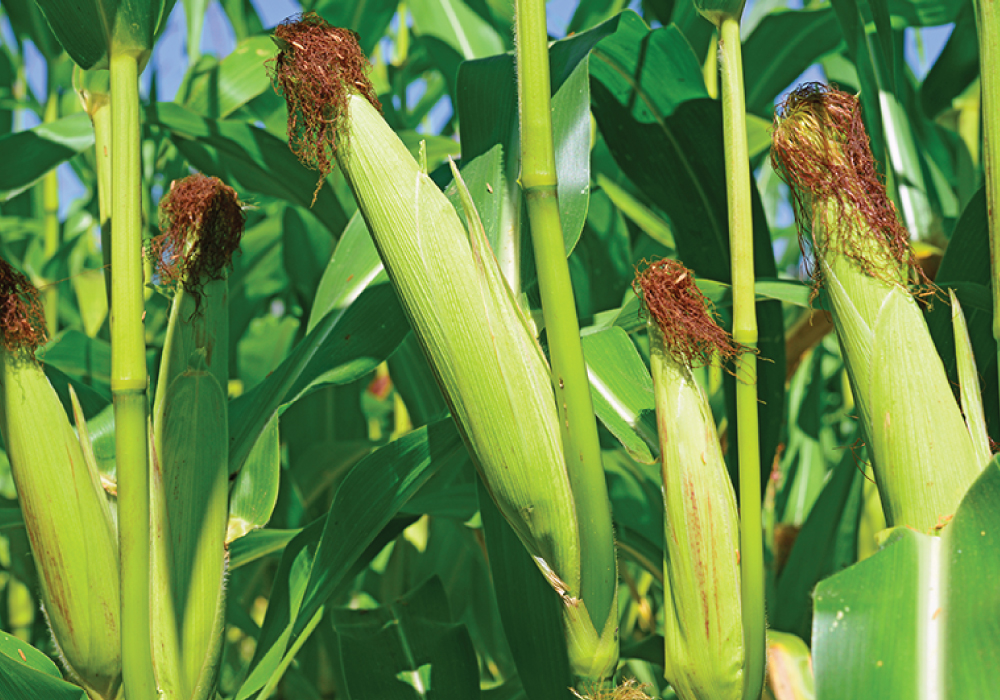
Maize is the cornerstone of food security and the agricultural economy in Kenya, serving as the primary staple food for millions. Successful cultivation from the “Breadbasket” regions (Trans Nzoia, Uasin Gishu, Nakuru) to smallholder farms nationwide requires precise, stage-specific management to overcome pests, diseases, and climate challenges. Murphy Chemicals Kenya provides a trusted portfolio of agrochemicals to optimize each critical growth phase.
Stages of Maize Growth & Recommended Murphy Chemicals Products
1. Land Preparation & Pre-Planting
- Objective: Create a weed-free, fertile seedbed with good tilth.
- Key Practices: Early ploughing, harrowing, soil testing, and incorporation of well-decomposed manure or basal fertilizer (DAP, NPK).
- Challenges: Persistent perennial weeds (e.g., couch grass), soil-borne pests, low soil fertility.
Murphy Chemicals Recommendations:
- Non-Selective Herbicide (for no-till/minimum till): Murphy Codex 860EW (Propaquizafop). While primarily selective, it can be used pre-planting at specific rates to control existing grasses. For broader spectrum pre-plant burndown, glyphosate-based products are standard, and Murphy offers compatible adjuvants.
- Soil Insecticide: Murphy Avisa® 500SC (Chlorpyrifos ethyl). Applied to soil at planting, it controls cutworms, stalk borers (early generation), wireworms, and other soil pests that attack germinating seeds and seedlings.
2. Germination & Seedling Establishment (VE-V2 Stage: 0-3 Weeks After Emergence)
- Objective: Achieve uniform, vigorous stand establishment.
- Key Practices: Proper planting depth (3-5 cm), timely sowing with onset of rains, and early weeding.
- Challenges: Seed and soil-borne diseases, cutworms, aphids, early weed competition, birds.
Murphy Chemicals Recommendations:
- Seed Treatment (Often pre-treated by certified seed companies): Fungicides and insecticides protect against early diseases and pests. Farmers can use **Murphy **Milthion Super 69EW (Propineb + Cymoxanil)** as a slurry treatment for saved seed.
- Early Post-Emergence Herbicide: Murphy **Codex 860EW. Applied at the 2-4 leaf stage of maize, it effectively controls annual grasses like *Eleusine* (goosegrass) and Digitaria without harming the maize crop.
- Pest Control (Cutworms/Aphids): Murphy Avisa® 500SC as a directed spray or Murphy Agora 247SC (Acetamiprid + Chlorantraniliprole) for sucking pests.
3. Vegetative Growth (V4-VT Stage: 3-8 Weeks)
- Objective: Develop a strong, healthy canopy for maximum photosynthesis.
- Key Practices: Top-dressing with Calcium Ammonium Nitrate (CAN) at knee-high stage, weeding, and scouting for pests.
- Challenges: Foliar diseases (Leaf Blights, Rust), fall armyworm (FAW), stalk borers, grasshoppers, and nutrient deficiencies
Murphy Chemicals Recommendations:
Fall Armyworm & Stalk Borer Control: Murphy Escort 19EC (Emamectin Benzoate). A highly effective insecticide for managing the devastating FAW larvae and other lepidopteran pests. **Timing is critical**—apply at early infestation signs.
Broad-Spectrum Insecticide: Murphy Agora 247SC. Excellent for controlling a complex of pests including aphids, thrips, and whiteflies, and it also has activity on younger FAW larvae.
Foliar Disease Control: Murphy Milthion Super 69EW or Triziman 690WP. Protects against Turcicum Leaf Blight (*Exserohilum turcicum*), Common Rust (*Puccinia sorghi*), and Gray Leaf Spot.
Foliar Nutrition: Murphy Biozone Flower® or Folixol®. Provides essential micronutrients (Zinc, Boron, Manganese) that boost plant vigor, stalk strength, and stress tolerance during rapid growth.
4. Reproductive Stage (Tasseling, Silking, Pollination) (R1-R2 Stage: 8-10 Weeks)
- Objective: Ensure successful pollination and grain set.
- Key Practices: Ensure adequate soil moisture, avoid pesticide application during peak pollen shed to protect pollinators.
- Challenges: Ear rots, continued pest pressure on ears (FAW, earworm), drought stress during silking.
Murphy Chemicals Recommendations:
Earworm & FAW Protection: Murphy Escort 19EC or Agora 247SC. Targeted application to protect the ear zone during early silking (before tassels completely dry) is crucial.
Fungal Ear Rot Prevention: Murphy Milthion Super 69EW applied just after silking can help suppress fungal pathogens that cause ear rots.
Stress Management: Murphy **Biozone Flower®**. The balanced nutrients aid in reducing pollination stress and improving grain fill initiation.
5. Grain Filling & Maturation (R3-R6 Stage: 10-16 Weeks)
- Objective: Maximize grain weight and achieve physiological maturity.
- Key Practices: Monitor for late pests, consider stalking for lodging prevention, plan for harvest.
- Challenges: Stalk and root rots, lodging, late-season diseases like Maize Lethal Necrosis (MLN) if vectored by insects, bird damage.
Murphy Chemicals Recommendations:
Stalk Rot Management: While primarily cultural, maintaining healthy foliage with earlier fungicide applications (**Milthion Super**) reduces stress that predisposes to stalk rots.
Late Pest Suppression: If pests persist, a final application of Murphy Escort 19EC may be needed, but strict Pre-Harvest Interval (PHI) must be observed.
Desication (if needed for hybrid seed production): Murphy herbicides like Codex 860EW can be used for controlled desiccation under specific guidance.
6. Pre-Harvest & Harvest
- Objective: Ensure grain is dry, safe, and ready for storage.
- Key Practices: Allow field drying, check moisture content (<13.5% for storage), observe PHI, harvest promptly.
- Challenges: Aflatoxin risk from field molds, theft, poor storage pests.
Murphy Chemicals Recommendations:
- PHI Compliance: Most critical. Cease all pesticide applications according to each product’s specified PHI (e.g., 14-21 days before harvest for many insecticides).
- Post-Harvest Grain Protection: While not a field stage, using recommended grain protectants (often permethrin-based dusts) in storage is essential. Murphy offers solutions for this crucial phase to control weevils and borers.
Critical Considerations for Kenyan Maize Farmers
1. Integrated Pest & Disease Management (IPDM): Agrochemicals are one pillar. Combine with: Planting resistant/tolerant varieties, crop rotation with legumes, intercropping, proper field sanitation, and use of pheromone traps for FAW monitoring.
2. Resistance Management: Rotate insecticide modes of action (e.g., alternate between Escort 19EC [Group 6] and products from other IRAC groups like pyrethroids) to delay FAW and borer resistance.
3. Soil & Water Conservation: Use conservation agriculture practices (minimum tillage, mulching) to improve moisture retention, especially in semi-arid regions.
4. Safe Use & Procurement: Always wear full PPE. Purchase genuine Murphy Chemicals products only from licensed agrovets. Consult Murphy agronomists or government extension officers for localized advice.
5. MLN Management: In affected counties, use MLN-tolerant hybrids, control aphids and thrips (vectors) with Murphy Agora 247SC, and practice strict roguing of infected plants.
By adopting this stage-specific management plan and utilizing the effective, reliable products from Murphy Chemicals Kenya within a holistic and sustainable farming system, maize farmers can significantly increase their productivity, enhance their resilience to climate and pest shocks, and secure both household food security and market profitability.